drain cleaning
Commercial Grease Trap Cleaning & Maintenance
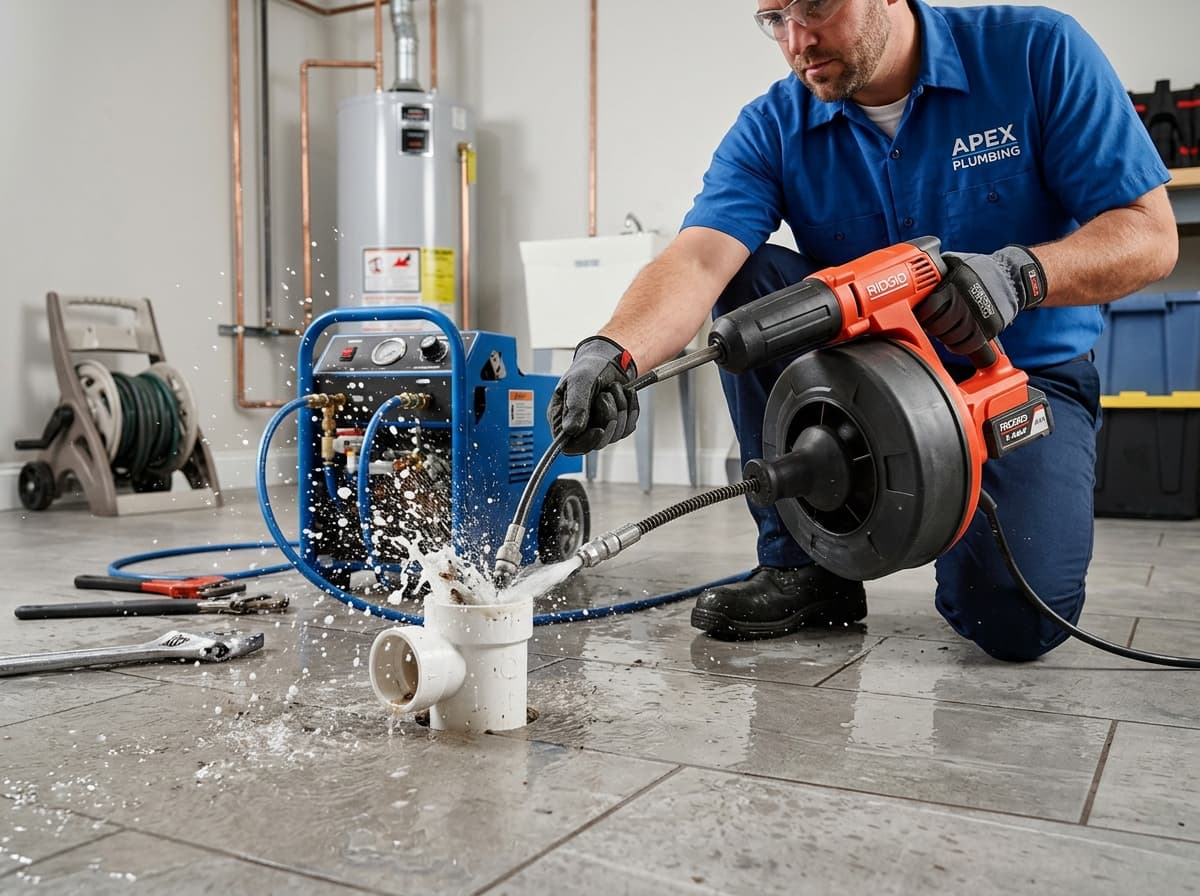
Every commercial kitchen produces grease — and every gallon of it that goes down the drain is a problem waiting to happen. Grease hardens in pipes, blocks sewer lines, and backs up into kitchens at the worst possible moment. A grease trap catches it first, but only if the trap itself is cleaned on schedule. Skip the cleaning, and the trap stops working — and the health inspector notices.
A grease trap separates fats, oils, and grease — known in the industry as FOG — from kitchen wastewater before it reaches the sewer. Wastewater flows into the trap, where grease floats to the top, solids sink to the bottom, and relatively clean water flows out to the sewer line. Small indoor traps sit under a sink and hold 20–50 gallons; large outdoor interceptors are buried in the ground and hold 500–5,000 gallons. Cleaning means pumping out the accumulated grease and solids, scraping the trap walls and baffles clean, inspecting the baffles, gaskets, and inlet/outlet pipes for damage, and disposing of the waste properly at a licensed facility. It is not the same as drain cleaning: drain cleaning clears a clog in a pipe, while grease trap cleaning empties and services the trap itself so it can keep protecting the pipes downstream.
Signs You Need Grease Trap Cleaning
- Slow drains in the kitchen — a full trap restricts flow through the whole kitchen drain system.
- Foul odors from drains or around the trap — rancid grease smells, and customers notice.
- Grease backing up into sinks or floor drains — a trap at capacity has nowhere left to catch grease.
- Your cleaning schedule has lapsed — most traps need cleaning every 1–3 months; busy kitchens need it monthly.
- A health inspection is coming — inspectors check grease trap maintenance records and can fine or close a kitchen that isn't compliant.
Our Process
Assessment
The plumber opens the trap, measures the grease and solids levels, and checks the baffles, gaskets, and pipes.
Upfront Quote
You get a clear price for the cleaning, including waste disposal, before work begins.
Cleaning
The trap is fully pumped out, the walls and baffles are scraped clean, and all waste is hauled to a licensed disposal facility.
Inspection and Records
The plumber inspects for damage, confirms the trap is working, and provides a service record for your compliance files.
What Affects the Cost
- Cleaning a small indoor grease trap (20–50 gallons) typically runs $150–$400 per visit.
- Cleaning a large outdoor interceptor (500–5,000 gallons) usually costs $400–$1,500 per visit, depending on size and how full it is.
- A scheduled maintenance contract with regular visits often costs less per visit than one-off emergency cleanings.
- Trap size and location, how much grease has accumulated, accessibility, disposal fees, and local rates all affect the final price.
- Costs vary by location and job; your plumber provides an exact quote after an on-site diagnosis. Emergency or after-hours service typically carries a surcharge of $50–$150 or 1.5–2x the standard rate.
✓ Safe to DIY
- Scrape plates into the trash first — the less food and grease that reaches the drain, the longer your trap lasts between cleanings.
- Use strainers in every sink to catch food scraps before they reach the trap.
- Keep service records — inspectors ask for them, and they protect you if a sewer backup is ever blamed on your kitchen.
- Train staff on what goes down the drain — one untrained shift can undo months of good practice.
✕ Stop & Call Us
- Never pour fryer oil down the drain — collect it for recycling; it overwhelms any trap.
- Do not attempt to pump out a large interceptor yourself — it requires pumping equipment and licensed waste disposal.
- Do not use chemical drain cleaners or enzyme additives as a substitute for scheduled cleaning; they do not empty a full trap.
Frequently Asked Questions
How often should a grease trap be cleaned?
Most commercial kitchens need cleaning every 1–3 months. High-volume kitchens — fryers, grills, fast food — often need monthly cleaning. The standard trigger is the 25% rule: when grease and solids fill 25% of the trap, it's time.
What's the difference between a grease trap and a grease interceptor?
They do the same job. "Grease trap" usually means a small indoor unit under a sink; "grease interceptor" usually means a large outdoor in-ground unit. Both need regular cleaning.
What happens if I don't clean my grease trap?
Grease passes through to your drains and the public sewer, causing backups, foul odors, and potential fines or closure from your local health or sewer authority. A neglected trap can also damage your own plumbing.
Can my staff clean the grease trap themselves?
Small indoor traps can sometimes be maintained in-house, but large interceptors require pumping equipment and licensed waste disposal. Most businesses use a professional service for the cleaning and the compliance paperwork.
Related Services
Request Service
Step 1 of 3- Upfront pricing — no surprise charges
- Licensed, background-checked plumbers
- Cleanup included on every job
Need a Trusted Plumber Fast?
From 24/7 emergency repairs and drain clearing to water heater replacements and leak detection, licensed plumbers across the USA are standing by.