drain cleaning
Professional Drain Cleaning Services
Local Service Details
In Charlotte, our heavy red clay soil and dense canopy of old-growth oak trees create the perfect storm for drain and sewer line issues. As the clay soil expands and contracts with seasonal rainfall, it places immense pressure on underground pipes, frequently causing them to shift or develop small cracks. Once a crack forms, the aggressive root systems of Charlotte’s iconic mature trees quickly seek out the moisture inside the line, leading to severe root intrusions and stubborn blockages.
Additionally, the wide variety of housing stock across the Queen City means drain cleaning isn't a one-size-fits-all job. Historic homes in neighborhoods like Dilworth and Plaza Midwood often still rely on original cast iron or terracotta pipes, which are highly susceptible to scaling and root damage. Meanwhile, newer homes in Ballantyne or University City might experience clogs from modern usage habits, like excessive use of garbage disposals. Our drain cleaning approach in Charlotte always starts with understanding the specific age and material of your home's plumbing.
A clogged drain is more than just a nuisance; it can cause wastewater to back up into your home, leading to unsanitary conditions and potential water damage. The plumbing network in your home relies on gravity and clear pathways. Over time, hair, grease, soap scum, and mineral deposits cling to pipe walls, narrowing the diameter until a complete blockage forms. When this happens, typical plunging or over-the-counter chemicals rarely solve the root cause, often just melting a small hole through the sludge that quickly closes back up.
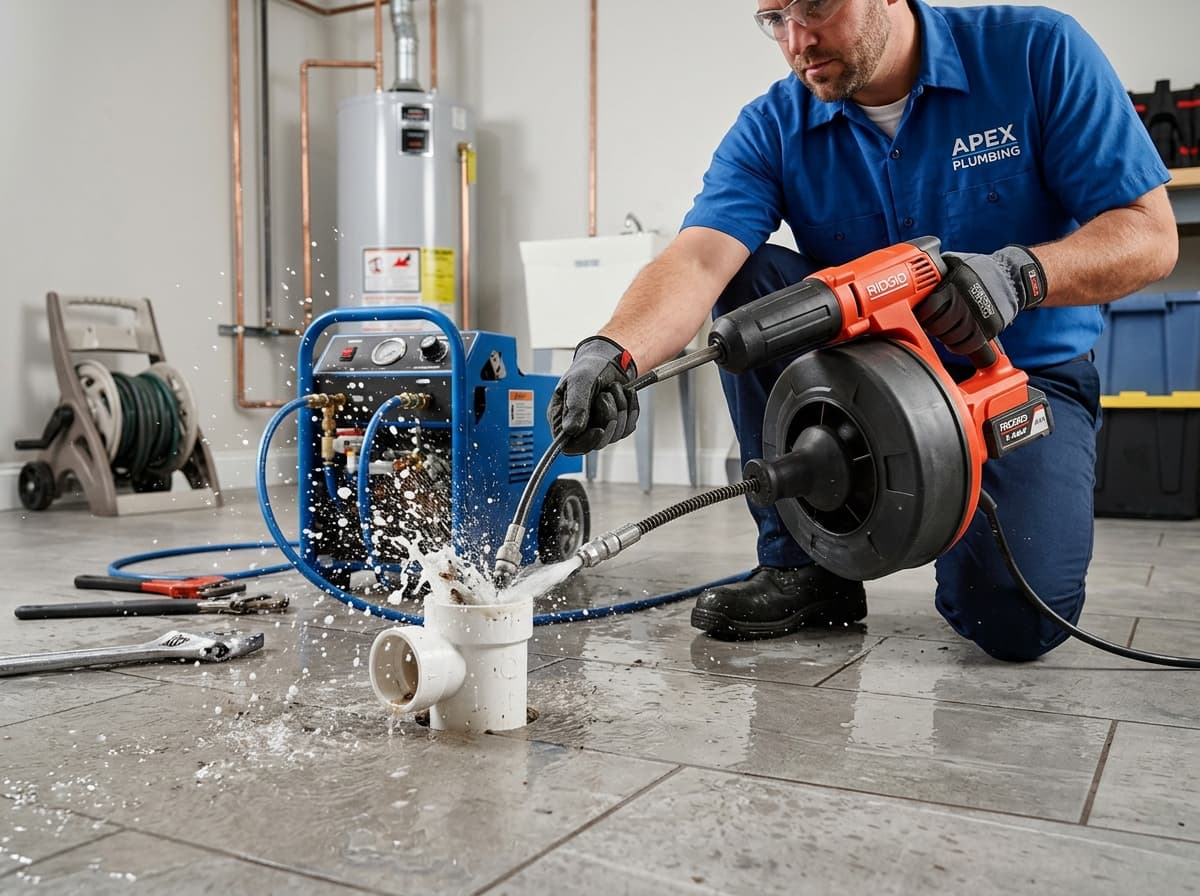
Professional drain cleaning addresses the actual buildup. Using high-grade steel cables (plumber's snakes) equipped with various cutting heads, technicians can scrape the walls of your pipes clean. For heavy grease or severe scaling, hydro jetting uses highly pressurized water to scrub the line back to its original capacity. This approach ensures your drains stay clear longer and protects the structural integrity of your plumbing system.
Signs You Need Drain Cleaning
- Water pooling around shower drains or sinking slowly in basins.
- Gurgling sounds coming from fixtures when water is running elsewhere.
- Foul, sewage-like odors emanating from kitchen or bathroom drains.
- Multiple fixtures backing up simultaneously, indicating a mainline issue.
- Frequent need to plunge toilets or sinks to maintain normal flow.
Our Process
Video Inspection
A waterproof camera is often run down the line to identify the exact location and composition of the clog.
Mechanical Snaking
A motorized auger with an appropriately sized blade cuts through standard blockages like hair and paper.
Hydro Jetting (If Needed)
For stubborn grease or heavy buildup, high-pressure water streams scour the pipe walls completely clean.
Flow Testing
Water is run continuously to ensure the line handles maximum capacity without backing up.
What Affects the Cost
- Location of the clog (branch line vs. main sewer line).
- The severity and material of the blockage (hair vs. tree roots).
- Accessibility to the necessary cleanout points.
- Whether specialized equipment like a hydro jetter or camera is required.
- Time required to fully clear and test the line.
✓ Safe to DIY
- Using a standard cup plunger on sinks and tubs.
- Using a flange plunger on toilets.
- Pouring boiling water down kitchen sinks (unless you have PVC pipes).
- Cleaning out the p-trap under the sink by hand.
✕ Stop & Call Us
- Pouring acidic chemical drain cleaners, which corrode pipes and are dangerous to handle.
- Jamming sharp objects like coat hangers deep into drains, risking pipe puncture.
- Dismantling pipes inside walls or under slabs without proper tools.
Frequently Asked Questions
Are tree roots in my sewer line covered by Charlotte Water?
Charlotte Water is only responsible for the main sewer line in the street and the lateral line up to your property line (usually at the cleanout near the street). Any clogs or root intrusions occurring between your house and the property line cleanout are the homeowner's responsibility.
Does the red clay soil cause my drains to back up?
Indirectly, yes. The expansive clay soil common in Charlotte shifts significantly between our wet winters and dry summers. This shifting can cause pipes to sag (creating "bellies" where debris catches) or crack, which eventually leads to a backup inside your home.
Why do my drains keep clogging?
Recurring clogs usually mean the pipe walls are coated in sticky buildup like grease or soap scum, or there is an object lodged in the line. A professional cleaning removes the entire blockage rather than just poking a hole through it.
Are chemical drain cleaners safe to use?
No, chemical drain cleaners rely on caustic reactions that generate intense heat, which can warp PVC pipes and corrode older metal lines. They also make the repair much more dangerous for the plumber who eventually has to open the trap.
How often should I have my drains cleaned?
For most households, professional cleaning is only needed when issues arise, but preventative hydro jetting every 2-3 years is recommended for older homes with cast iron pipes or recurring root intrusions.
Related Services
Request Service
Step 1 of 3- Upfront pricing — no surprise charges
- Licensed, background-checked plumbers
- Cleanup included on every job
Need a Trusted Plumber Fast?
From 24/7 emergency repairs and drain clearing to water heater replacements and leak detection, licensed plumbers across the USA are standing by.